
You're not on a Learning Curve. You're on a Treadmill.
Why AI adoption feels like it never ends.

The more familiar you get with AI, the more work there is to do.
I’ve been having a version of the same conversation with people in tech. We are all in varying levels of excitement, exhaustion, or both at the same time.
For the past years, the big conversation around AI was mostly about other industries. Which jobs would disappear. Which sectors will be disrupted.
Then the conversation moved inside the tech industry… every table turned. Anthropic published research that put numbers on what that looked like.
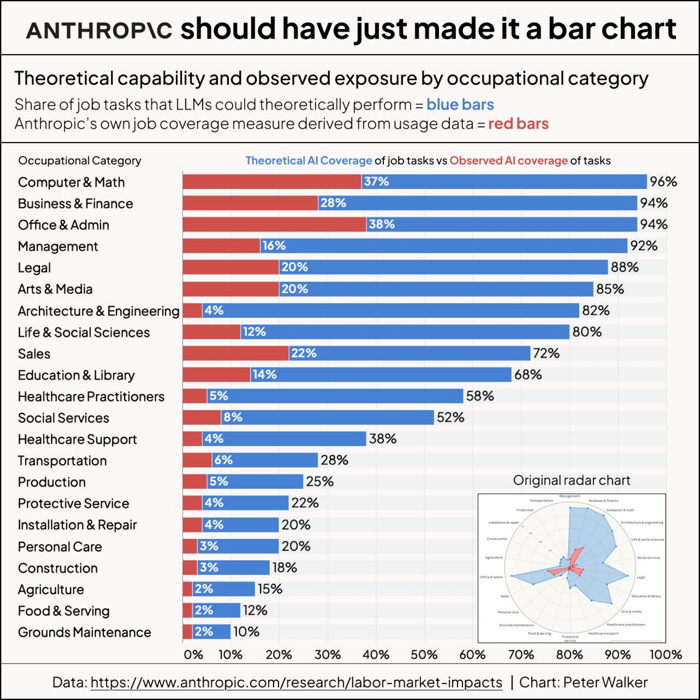
A lot of people who are in catch-up mode in AI are feeling like it’s not getting easier.
I assumed that would change. That’s how it had always worked… with email, spreadsheets, any new tech. You’re unfamiliar, you lean to the uncomfortable and learn it, then it disappears into the background. Fluency sticks and you move on. We call this the learning curve.
That hasn’t happened (yet?) with AI, and it has been years. You learn something and before it even settles, it updates. The workload hasn’t gone down the more familiar you’ve gotten. It’s gone up. Not because AI failed to deliver its promise (contrary to what others would say) but because the pace keeps resetting before the you can benefit from the returns.
The curve never resolves because the ground keeps moving.
The analogy most of us are thinking is a hill. You climb, you get somewhere, eventually you stop because you’re at the top. The workload is front-loaded. The return compounds with a view of the summit.
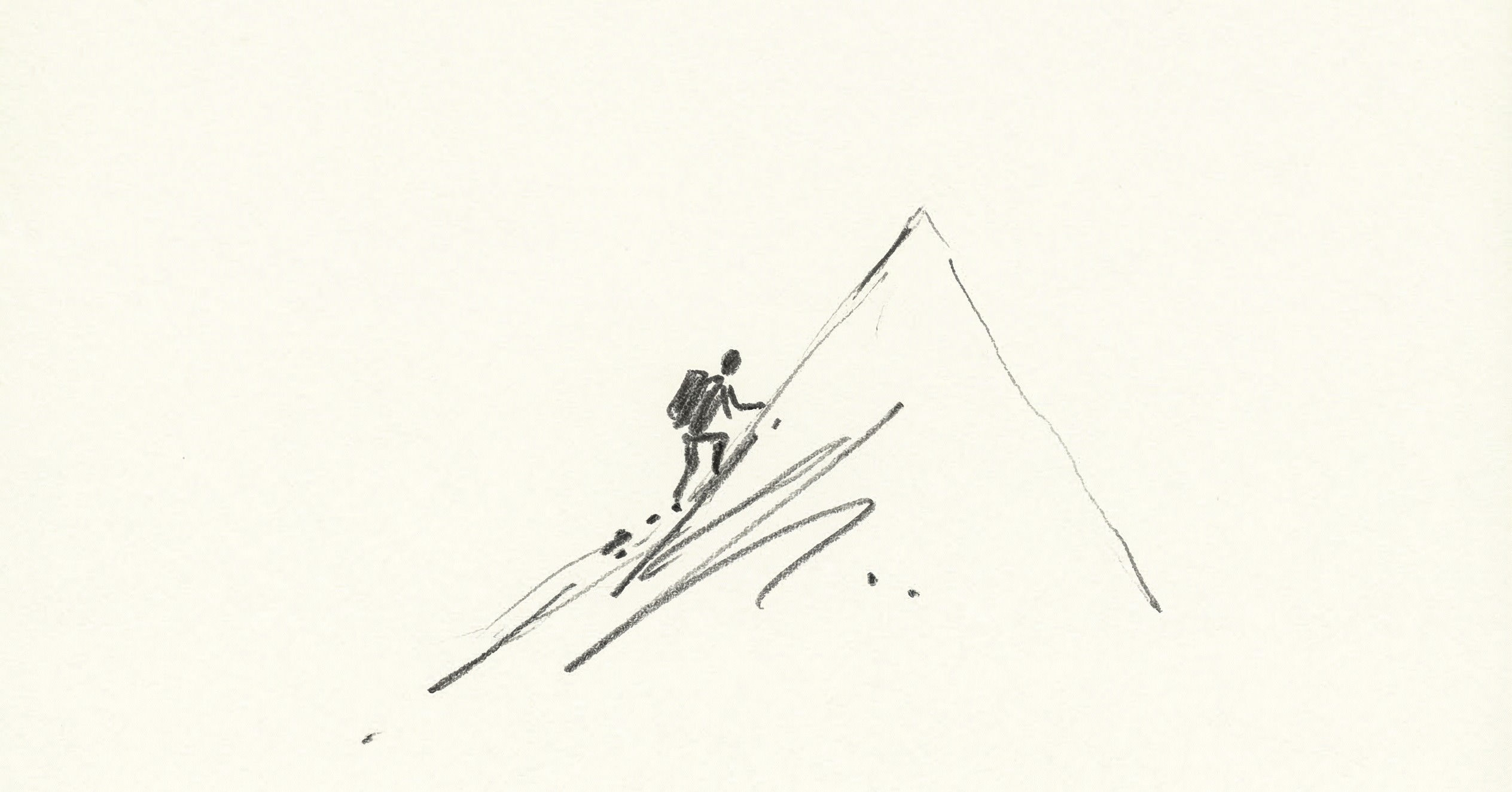
But we’re not a hill… we’re on a treadmill.
When you are thinking this is a hill, not seeing the summit does not only feel exhausting. It feels unproductive, and you start asking, “what is the point?”
When you expect a summit, being on a treadmill feels like failure.
I’ve watched people respond to this differently.
There are people in full catch-up mode, spending more time learning tools than actually using them.
Others have stepped off entirely, waiting for things to stabilize. In most tech cycles, this is where most people are. This is also what most people do when they’re not seeing the payoff of trying to keep up.
When you start treating it like you’re in a treadmill, you stop trying to master whatever’s current and start building the capacity to absorb whatever’s next. Those are different goals. The first one is about asking “where is the finish line?” This one is “how do I get better at running?”
There is a time and place to ask different types of questions. And during a time where the learning curve is not a curve, it is important to sustain your energy by having better frame of mind.
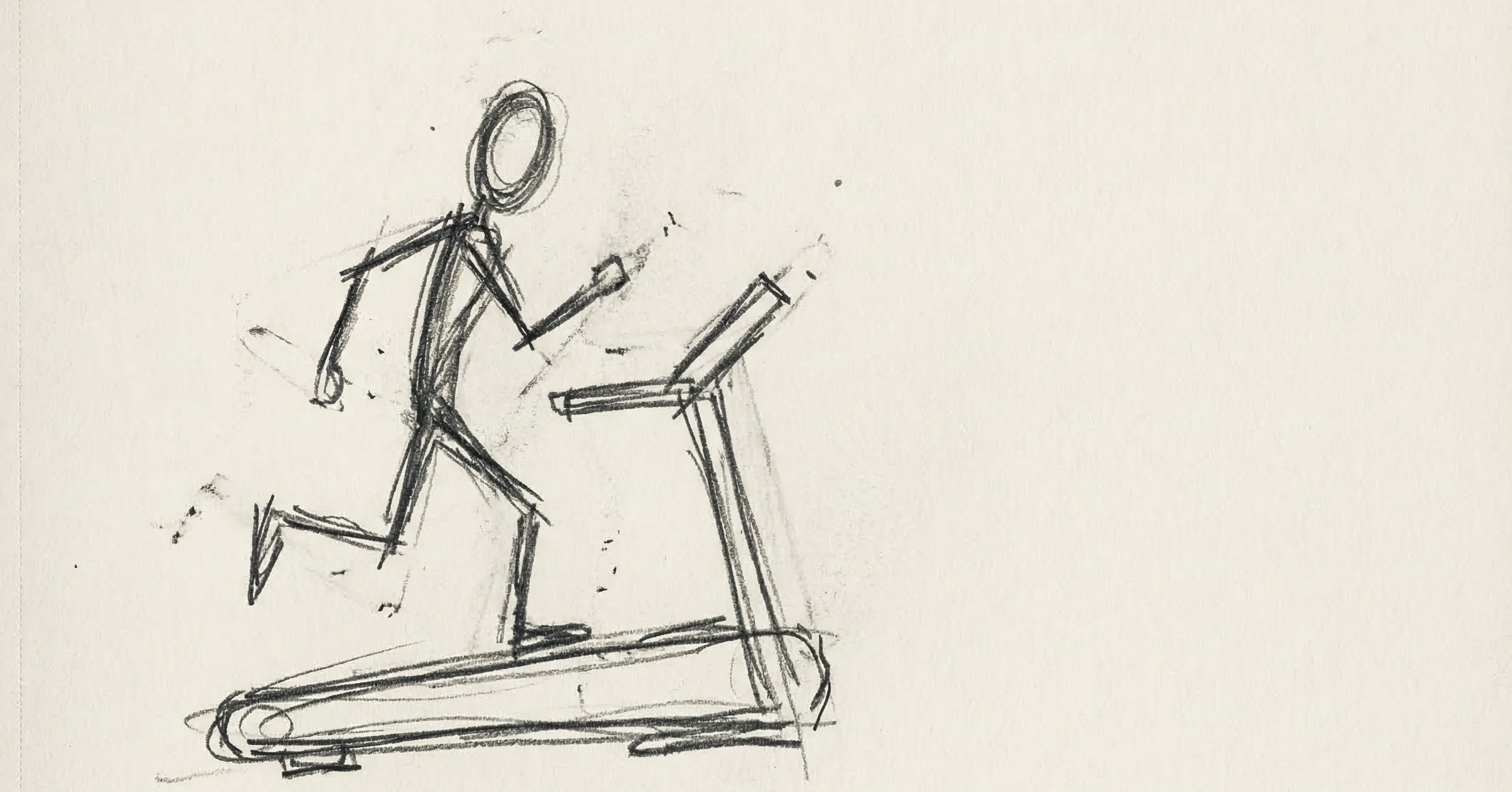
When you shift from mastery to capacity, it changes what you’re measuring yourself against. Not the current state of the tools. Your own adaptability. It doesn’t make the treadmill stop. But it changes how it feels as you keep going. You stop chasing a summit that doesn’t exist (yet?) and start building endurance. That’s not a consolation prize.
That’s the whole game.